
How to Set Up a Buffet Display That Holds Up From the First Plate to the Last
How to Set Up a Buffet Display That Holds Up From the First Plate to the Last
A buffet looks finished or it looks tired. The food doesn't change between minute one and minute ninety, but the display does, and the display is what your guests see when they decide whether to go back for another plate.
This is a working guide for caterers and event planners who set up buffet displays for a living. It covers height, spacing, weight distribution, the order you should set pieces down in, and the small staging decisions that make a 12-foot table look composed instead of crowded.
Start with the height plan, not the food
The most common mistake is placing food first and reaching for risers after. The eye reads the silhouette of the buffet before it reads the food. If every dish sits at the same height, the table looks flat no matter how well the food is plated.
The working rule for a buffet of 8 to 16 feet:
- One peak per 4 to 5 feet of table. A peak is your tallest riser or a vertical centerpiece. Two peaks on a 10-foot table is one too many.
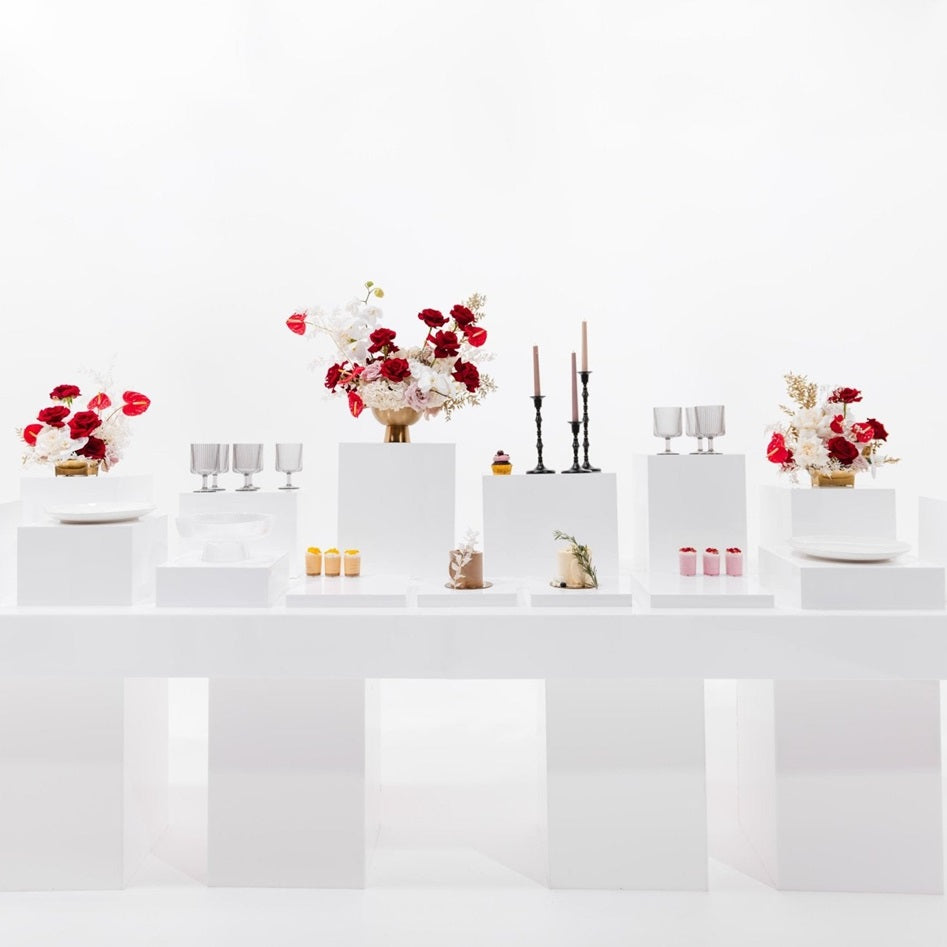
- Three height tiers minimum. Floor (the table surface itself), mid (6 to 9 inches), and top (12 to 18 inches). A buffet with only two heights looks unfinished.
- Drop the height as you move toward the edges. Tall in the center, mid through the middle thirds, low at the ends. This pulls the eye toward where the action is.
Buffet height itself: where the table starts
Standard banquet buffet tables sit at 30 inches. Cocktail-height buffets sit at 42 inches. The taller the table, the smaller your peak risers can be, because the floor of the table is already elevated. A 12-inch riser on a 42-inch buffet reads taller than an 18-inch riser on a 30-inch one.
For a seated banquet where guests will be sitting most of the night, build for the standing-up view. They see the buffet on approach, not while plated.
Spacing: what to put where
Buffets fail when stations bleed into each other. Each food category needs visual breathing room, not just physical clearance for serving spoons.
- 18 inches between dish edges for plated entrees. Less and the buffet reads cluttered.
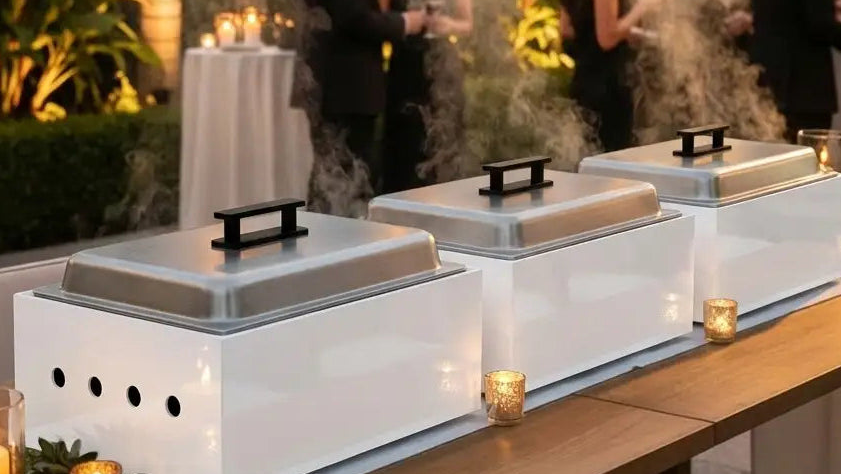
- 24 inches between hot stations when chafing dishes are involved. Sterno heat carries, and guests will reach across a station they don't want to touch.
- One propped or risered dish per 3 feet of table. More than that and the eye loses focus.
The setup order that actually works
Set up in this order. Reversing it costs you 20 minutes at the end:
- Linen. Steamed, falling cleanly past the table edge. If you can see staples or table edge, the rest doesn't matter.
- Backdrop pieces if any. Easels, signs, branded backdrops.
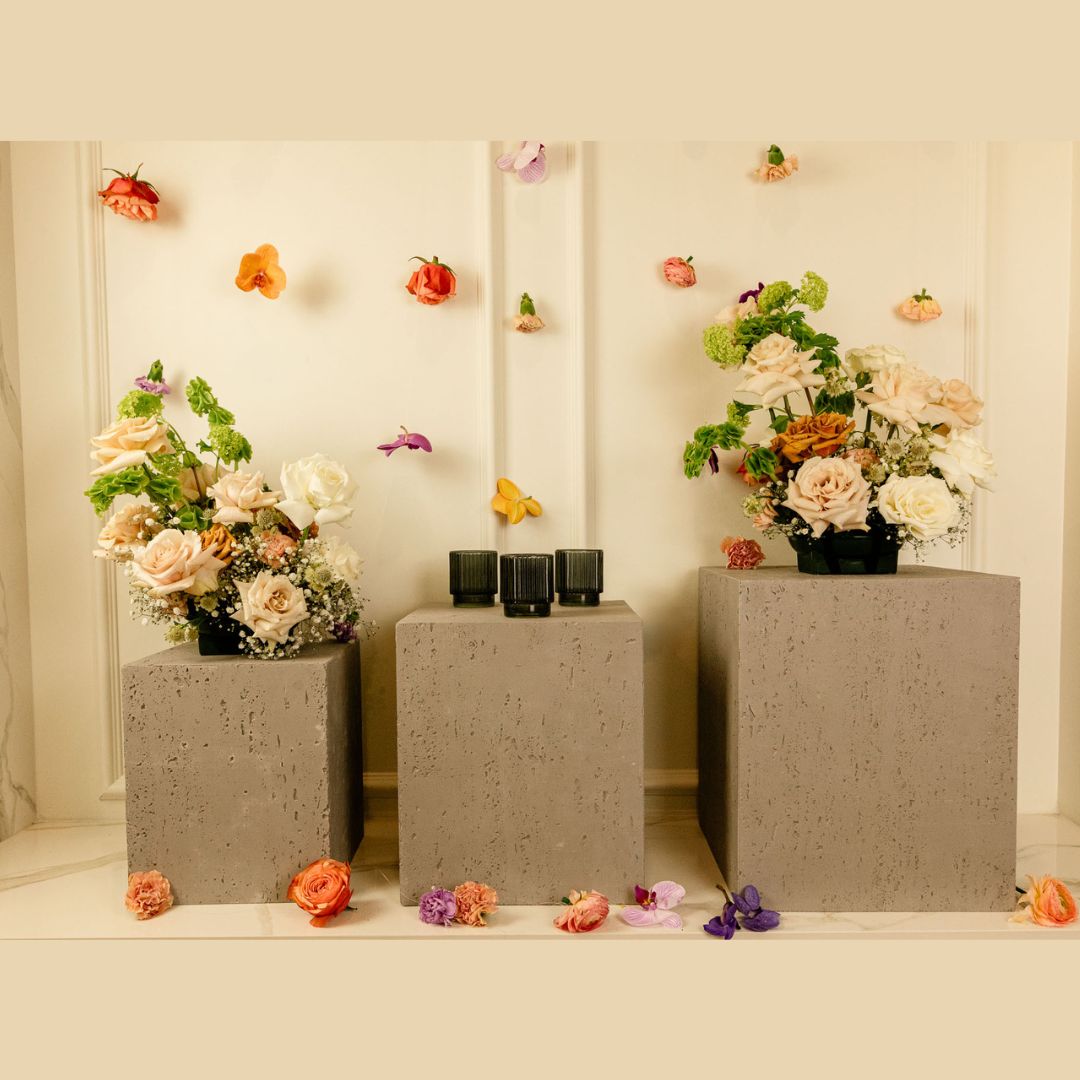
- Tall risers and tower pieces. These set the silhouette.
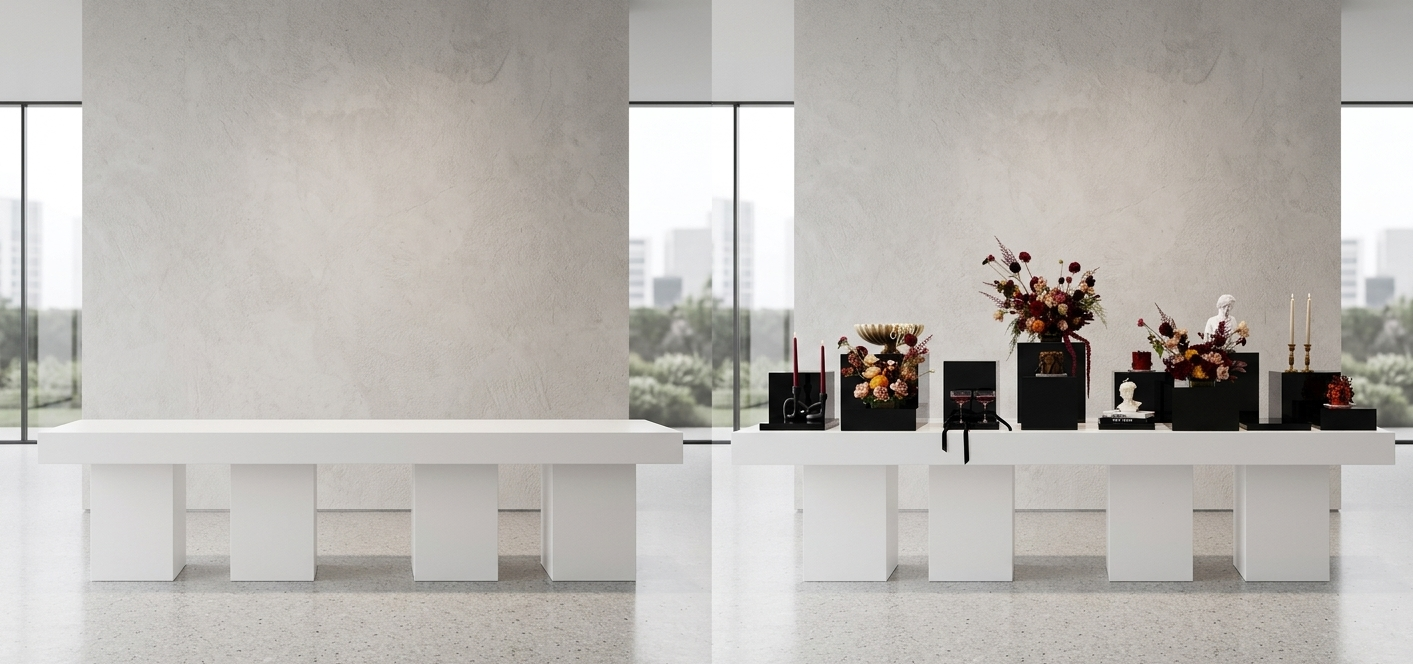
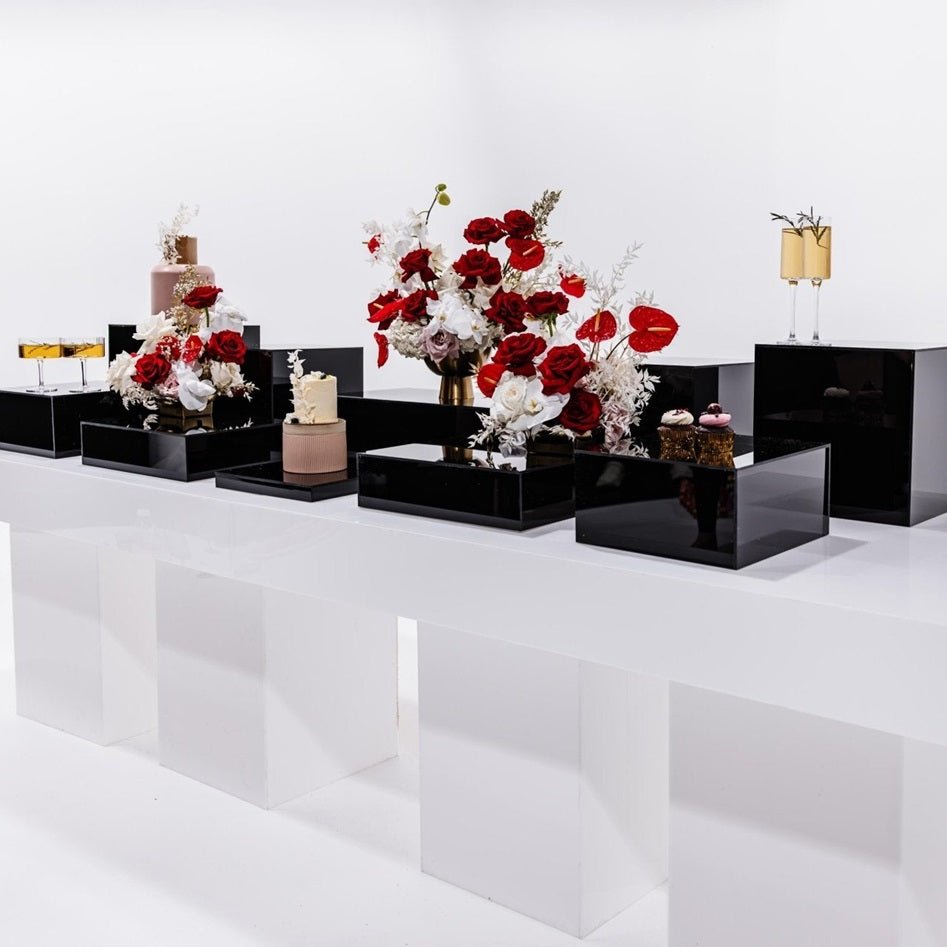
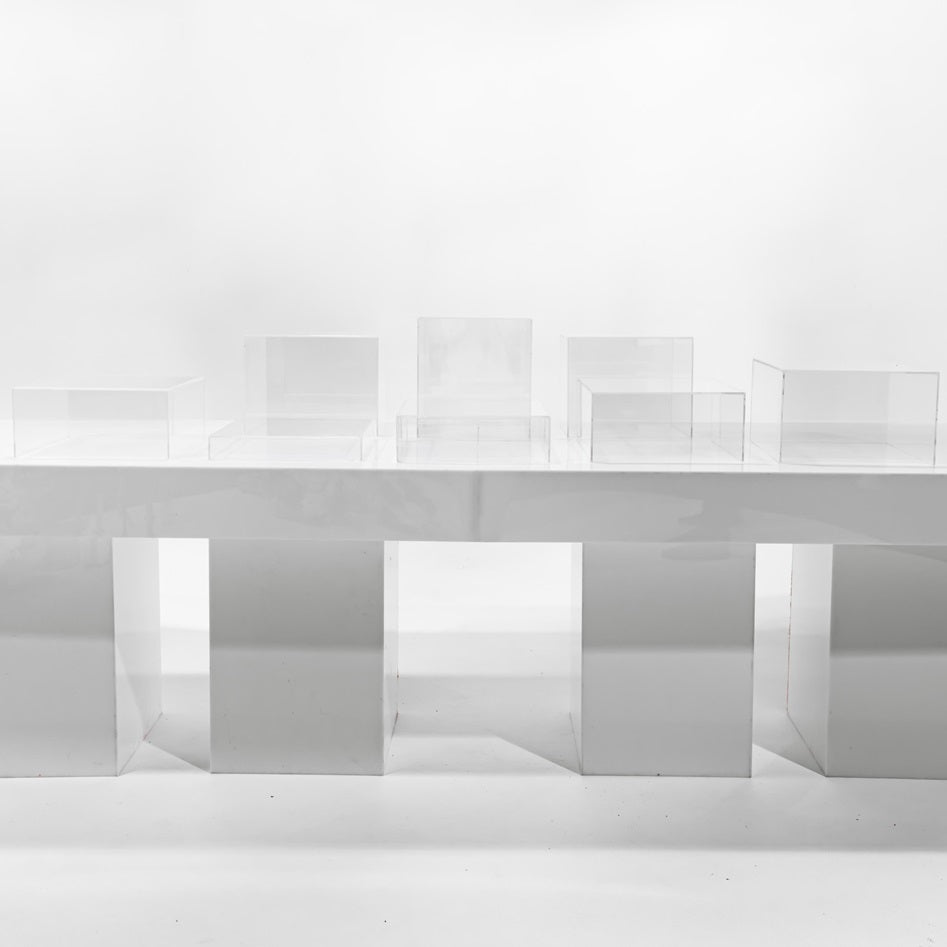
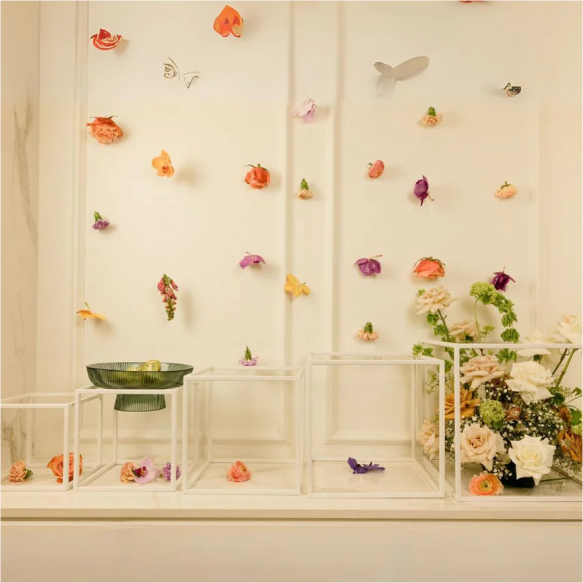
- Mid-height risers and plinths. Modular sets shine here — you can adjust placement without dismantling.
- Chafing dish frames + chafing dish wind guards. Wind guards before fuel, every time. A magnetic chafing dish guard installs in about 10 seconds and stops sterno flare in open ballrooms.
- Platters and serving vessels placed empty. Adjust the geometry now, before food.
- Garnish props, signage, menu cards.
- Food, last. Hot last of all.
Weight: the thing nobody plans for
A full chafing dish with water and a tray of pasta is around 18 pounds. A glass platter loaded with cheese and fruit can hit 12. A riser holding two platters needs to be rated for the combined load, not the empty weight.
Acrylic risers from the catering supply category sit in two tiers: decorative (8 to 12 lb rated) and commercial-grade (40+ lb rated). For platters, decorative is fine. For chafing dishes, vases of water, or stacked plate towers, decorative will crack. The cost difference is small. The replacement cost when one breaks mid-service is not.
The 90-minute test
Walk away from your finished buffet for 10 minutes, then come back and look at it cold. Things you'll notice:
- Asymmetric heights you couldn't see while setting up
- Glare from a riser angled toward a window or downlight
- A station that looks empty because the platter is too small for the riser
- Sightlines blocked by a peak that worked on paper but kills the line of sight to the main station
Adjust before the doors open. The buffet you sign off on at minute 0 is the one your guests see at minute 90.
What this looks like in practice
For a 12-foot buffet built around two hot stations and a salad station, a workable structure is:
- Center: one 15-inch acrylic plinth holding the focal salad bowl or a branded sign
- Either side of center: 9-inch riser holding the hot-station platter, plus an 8-inch chafing dish frame with a magnetic chafing dish guard
- Outer thirds: 6-inch riser pairs holding plated cold dishes, with one low platter directly on the linen between them
- Ends: a single low piece each, with a stack of plates or a beverage station
That's three peaks, four mid-heights, two floor-level pieces. Symmetrical. Composed. Easy to refresh mid-service.
Pieces that earn their place
Modular acrylic display sets are the workhorse here. You're not buying one riser for one event — you're buying a kit that recombines for the next twelve. Acrylic buffet risers and food display sets are sized for grazing tables, dessert spreads, and full hot-cold buffets in white, black, gold, and clear. Modular display tables give you the flexibility to build wider stations on the fly. Magnetic chafing dish guards are the one piece that pays for itself in the first windy ballroom.
For the serving platters and catering plates that anchor the display and survive a full service run, see the shatterproof catering plates and serving platters collection.
The setup is the product. The food is what gets photographed.