
Modular Food Display Systems: Why Caterers Are Switching from Fixed Setups
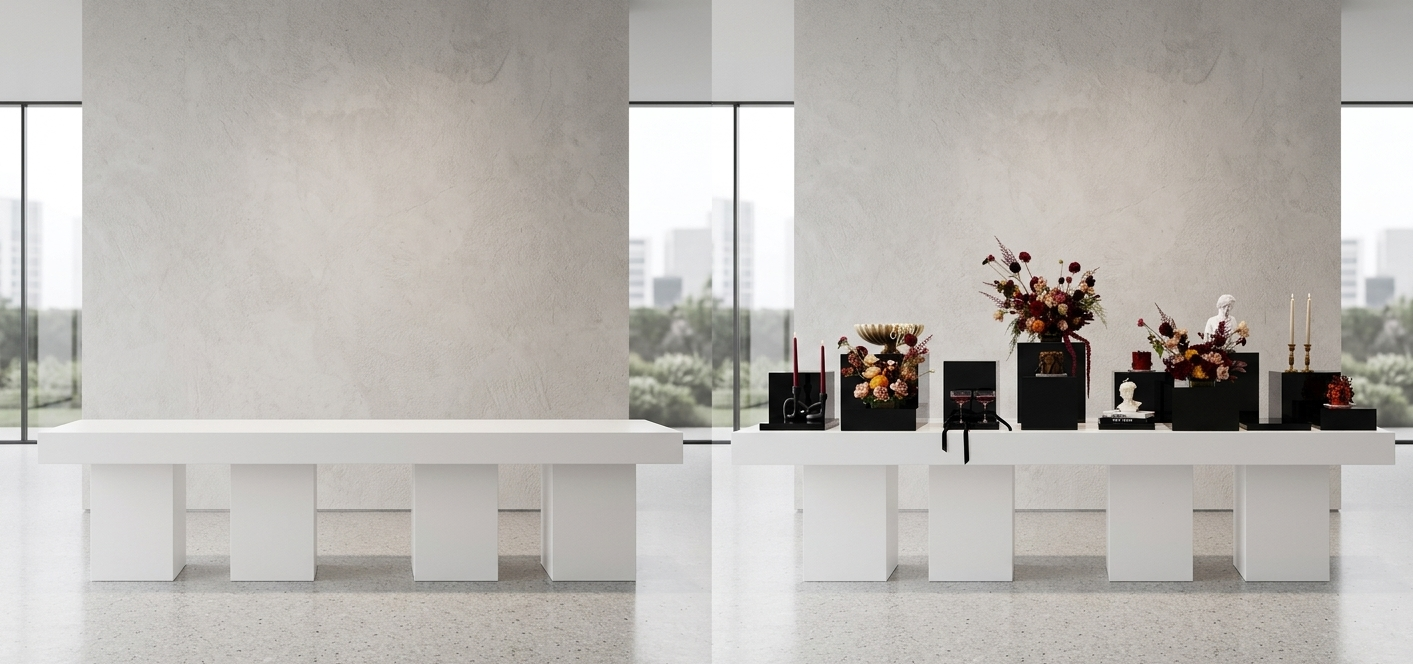
A modular food display system is a set of interchangeable pieces that can be arranged in different configurations for different events. Unlike fixed tiered stands or one-piece buffet fixtures, modular systems let caterers build custom layouts from the same equipment. A single set adapts to a 30-guest cocktail hour, a 100-guest wedding buffet, and a 200-guest corporate gala without buying separate display equipment for each event type.
Fixed vs Modular: What Changes
| Feature | Fixed Display (tiered stands, single-piece) | Modular System (nesting risers, mix-and-match) |
|---|---|---|
| Configurations | 1-2 layouts per piece | 100+ layouts per set |
| Adapts to event size | No, fixed capacity | Yes, use fewer pieces for small events |
| Adapts to table shape | Designed for one table format | Works on round, rectangular, L-shaped, island tables |
| Storage | Each piece occupies full footprint | Pieces nest inside each other |
| Replacement | If one part breaks, replace the whole unit | Replace one piece, keep the rest |
| Growth path | Buy bigger fixed units for bigger events | Add pieces to the same system |
| Visual consistency | Consistent within one unit, but different units look different | All pieces match, every event looks cohesive |
How Modular Display Systems Work
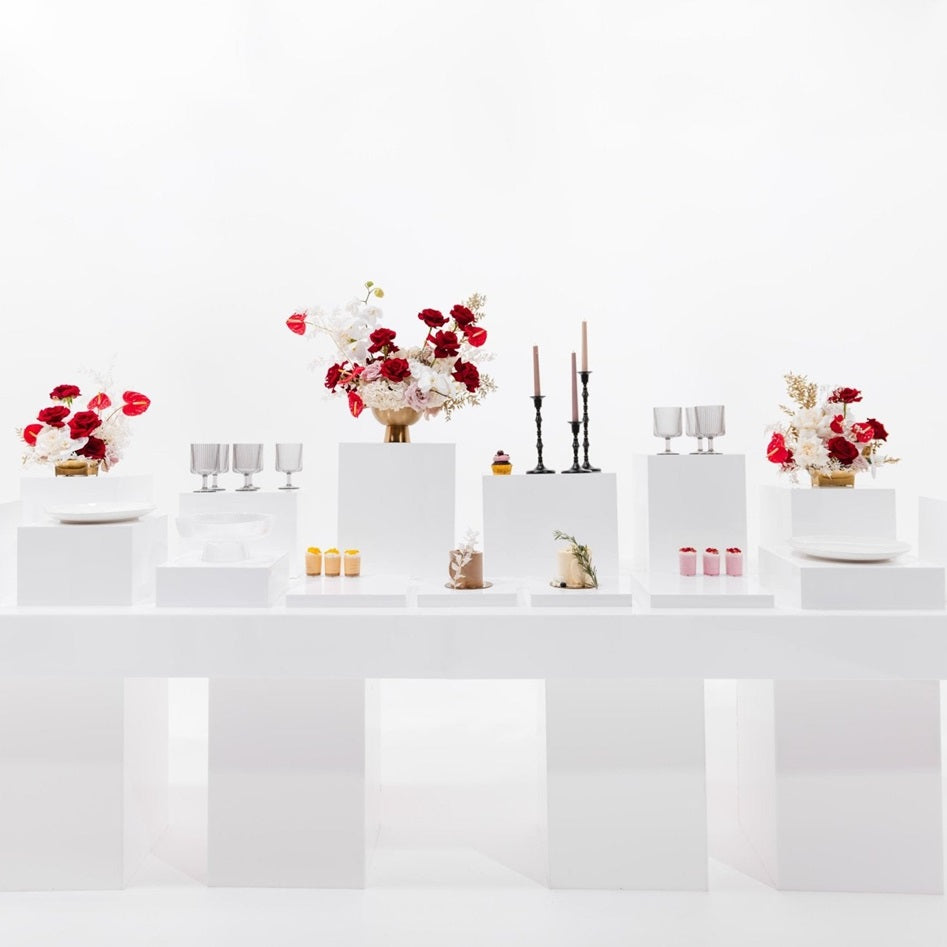
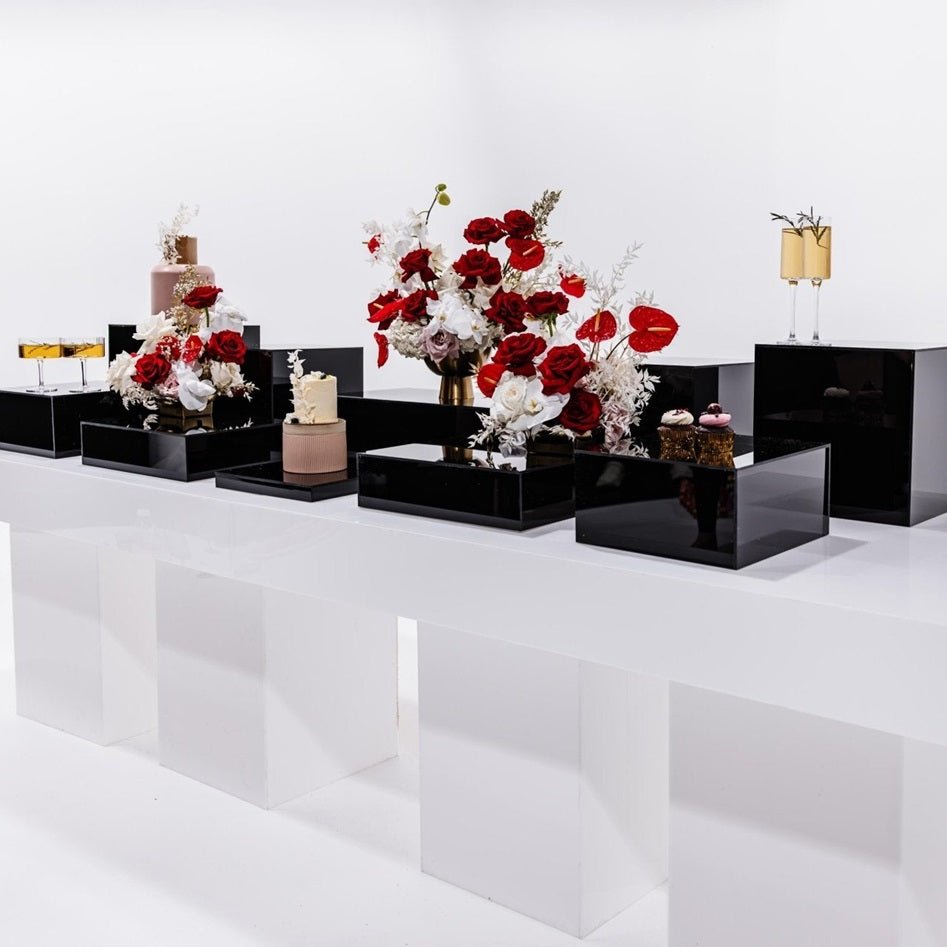
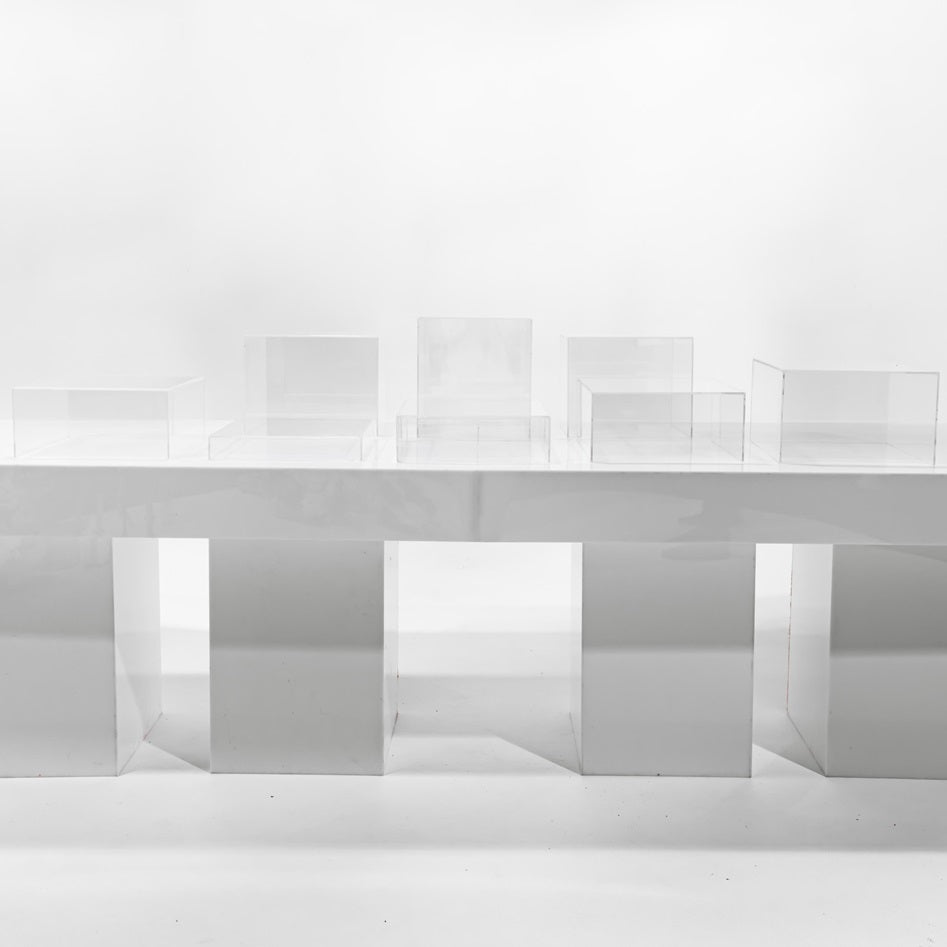
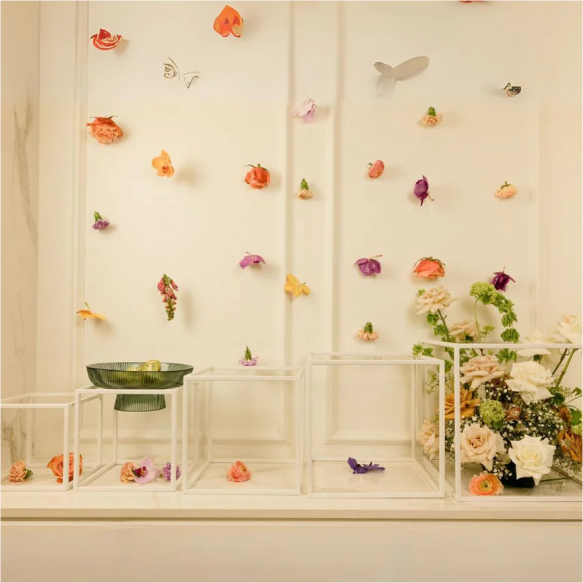
The core concept is graduated sizing. Each piece in the system is a different height, and every piece shares the same design language (material, finish, proportions). You select which pieces to use based on the event, arrange them in any order, and the result always looks intentional because the pieces were designed to work together.

A typical modular set includes:
- 3-4 tall pieces (12-16 inches) for hero dishes and centerpieces
- 3-4 medium pieces (8-10 inches) for main courses and sides
- 3-4 short pieces (4-6 inches) for appetizers and bread
- All pieces nest inside each other for transport
Three Modular Layouts Every Caterer Should Know
The Cascade
Arrange all pieces in descending height from one end to the other. Creates a waterfall effect that draws guests along the buffet line. Works best for single-sided buffets against a wall or backdrop.
The Archipelago
Create 3-4 island clusters across the table, each with 2-3 pieces at different heights. Leave open space between clusters for serving utensils and visual breathing room. Works best for island buffets where guests approach from all sides.
The Bookend
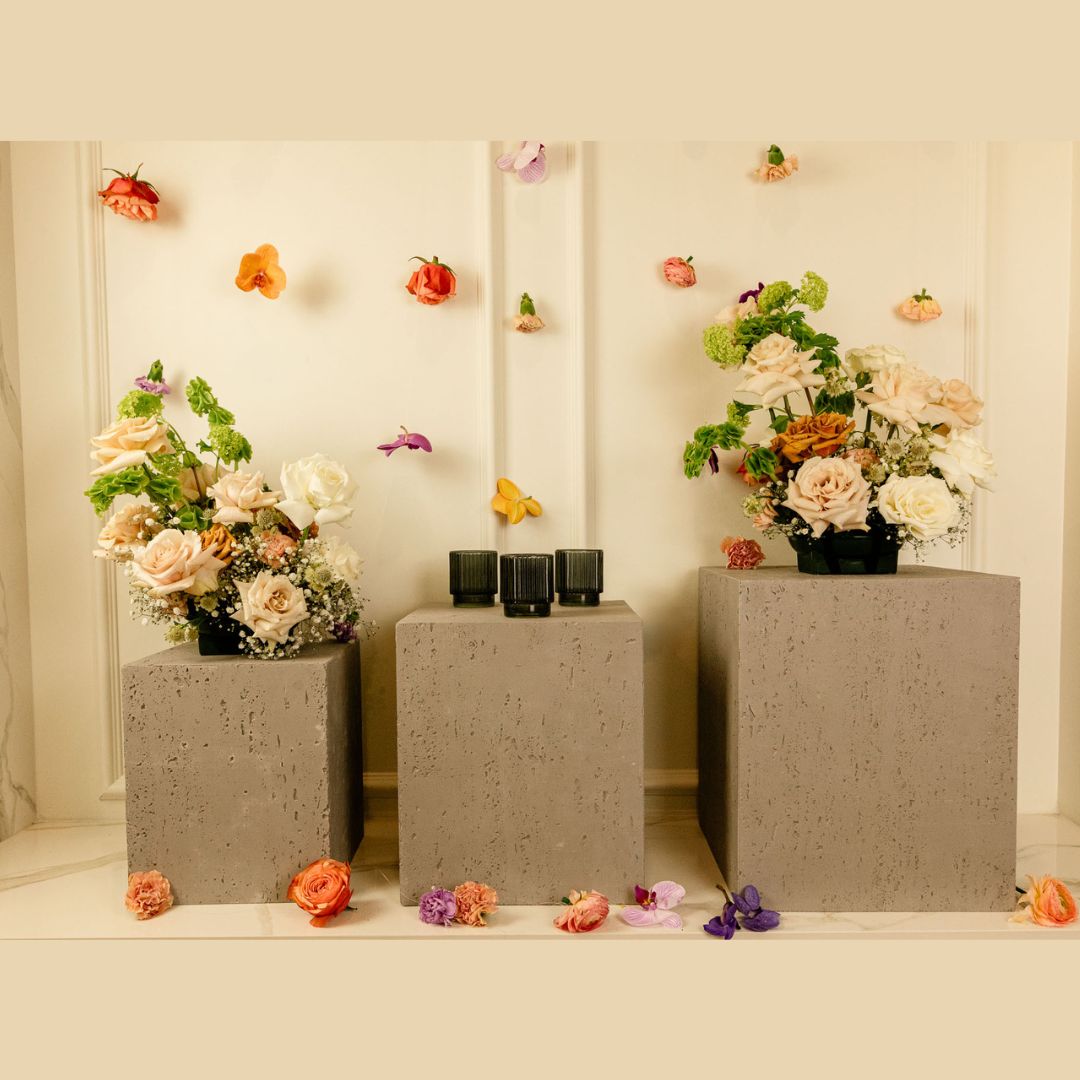
Place tall pieces at both ends of the table with medium and short pieces in the center. Creates symmetry that works for formal events. The tall bookends anchor the display visually and draw attention from across the room.

Scaling Your System as Your Business Grows
The biggest advantage of modular systems is the growth path. You do not outgrow the equipment. You add to it.
| Business Stage | Start With | Add When Ready | Events Covered |
|---|---|---|---|
| New caterer | Trio set (3-piece) | Second trio in a different height | 25-50 guests |
| Growing operation | 7-piece nesting set | Trio sets for accent stations | 50-100 guests |
| Established caterer | 13-piece display system | Combo system (20-30 piece) for galas | 100-200+ guests |
Every piece in the system uses the same 5mm cast acrylic and the same finish. A trio set purchased in year one matches a display system purchased in year three. Your presentation stays cohesive as your inventory grows.

Why Nesting Matters for Modular Systems
A modular system that does not nest is just a collection of separate risers that happen to match. True modular systems are precision-cut so each piece fits inside the next. This matters for three reasons:
- Transport. A 7-piece set occupies the space of 1 piece in your vehicle. A 13-piece system fits in a single carrying case.
- Storage. Between events, your entire display system occupies one shelf instead of thirteen.
- Protection. Nested pieces protect each other's surfaces. No rattling, no scratching, no separate padding needed.
Browse the full modular display system collection.
FAQ
What is a modular food display system?
A modular food display system is a set of interchangeable risers and platforms that can be arranged in different configurations for different events. All pieces share the same material and design language, so any arrangement looks cohesive. The system scales by adding pieces rather than replacing the entire setup.
How many pieces do I need for a modular display?
Start with 3 pieces (a trio set) for small events. A 7-piece nesting set covers standard buffets for 50-100 guests. A 13-piece system provides full coverage for large events. You can mix sets as your business grows because all pieces are designed to work together.
What makes modular better than fixed tiered stands?
Modular systems adapt to any event size, table shape, and layout. A fixed tiered stand has one configuration. A modular system creates 100+ layouts from the same set. Modular pieces also nest for compact transport, while fixed stands occupy their full footprint in storage and transit.
Do all the pieces need to match?
For a professional look, yes. All pieces should share the same material, finish, and design proportions. Mixing random risers from different brands creates visual inconsistency. Professional modular systems are designed so every piece in the range matches every other piece.
Can I start small and add pieces later?
Yes. This is the core advantage of modular systems. Start with a trio set for small events. Add a 7-piece set when you book larger events. Every new piece integrates with your existing inventory because the material, thickness, and finish are consistent across the entire product line.
Last updated: April 14, 2026
Comparing brands? Read our 2026 Best Buffet Risers Buyer's Guide — honest side-by-side reviews of Plinths NY, Rosseto, Cal-Mil, Webstaurantstore, and Decormaniacs with a decision matrix.