
Hotel Breakfast Buffet Setup: A Daily Service Playbook
Why hotel breakfast is a different discipline
Wedding catering is about one perfect event. Hotel breakfast is about 365 of them.
The display infrastructure that works for a three-hour wedding reception often fails at a hotel breakfast buffet because it was never designed to be set up, broken down, cleaned, and set up again every day for a decade. Daily commercial service exposes every compromise in the equipment.
This guide is for the operators who run continental and hot breakfast buffets at hotels, conference venues, corporate campuses, and extended-stay properties. Durability first. Aesthetics close second. Food safety non-negotiable.
The economics of daily buffet equipment
A wedding caterer buys display risers and uses them 40 to 80 times a year. A hotel uses the same risers 365 times. Over five years:
- Wedding caterer: 200 to 400 uses
- Hotel: 1,825 uses
Equipment that barely holds up at wedding intensity cracks, yellows, or warps in the first year of hotel service. The cost calculation changes entirely. A $400 commercial-grade set that lasts five years of hotel use costs $0.22 per service. A $150 consumer-grade set replaced annually costs more than twice as much and costs you guest complaints when it shows wear.
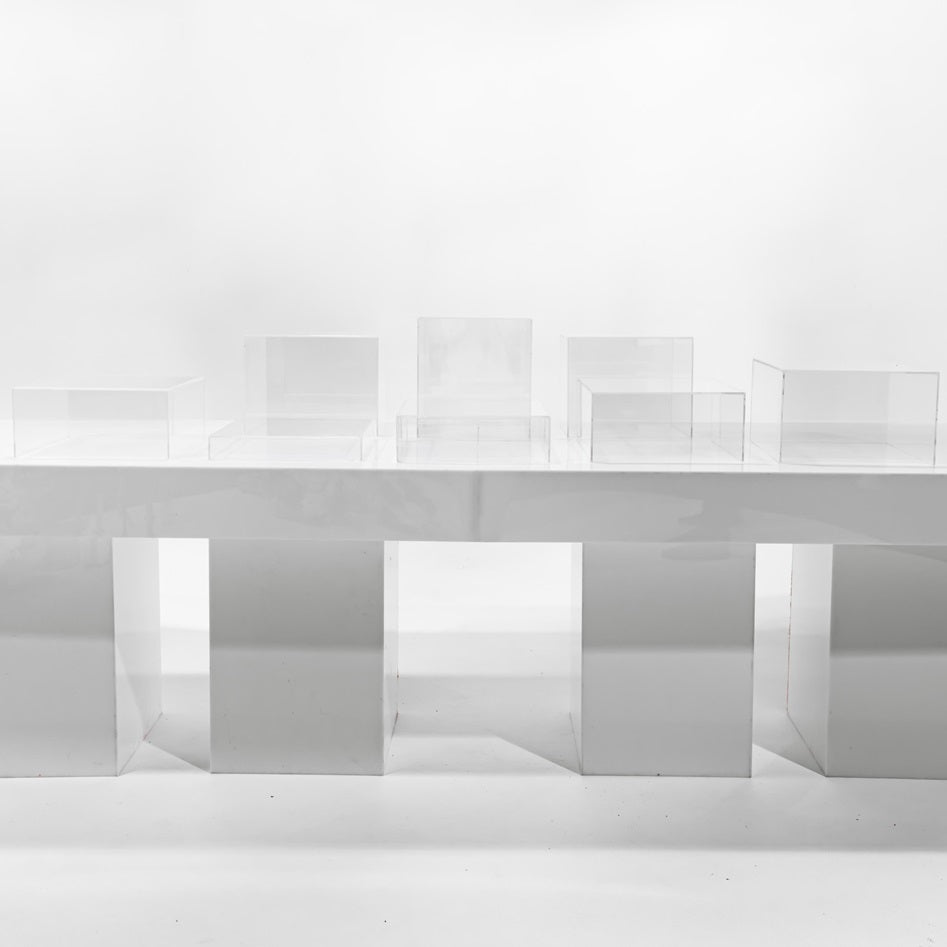
Plinths New York commercial-grade acrylic is rated for daily commercial service, backed by a 3-year professional warranty, and in practice lasts 5+ years under hotel conditions.
The standard hotel breakfast layout
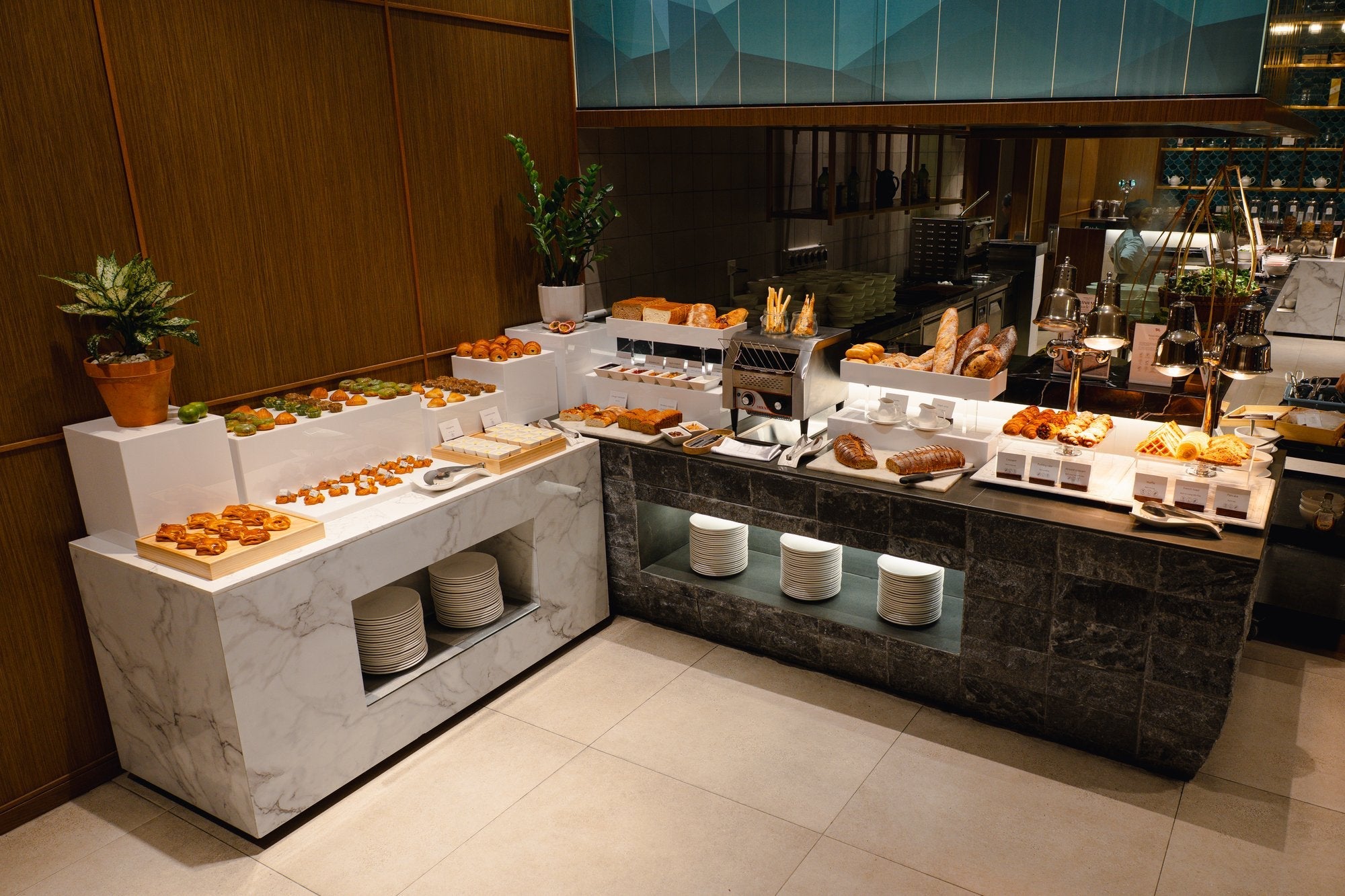
Most hotel breakfast buffets use a three-island or one-line configuration:
Three-island layout (preferred for 75+ guest capacity):
- Hot island: chafing dishes for eggs, bacon, potatoes, sausage, pancakes. 12 to 18 linear feet.
- Cold island: yogurt, fruit, cheese, cereal, milk, juice. 8 to 12 linear feet.
- Bakery island: pastries, bread, toaster station, butter, jam. 6 to 10 linear feet.
Islands are separated by 5 to 8 feet of walking space so multiple guests can serve simultaneously.
One-line layout (for smaller properties):
Single 12 to 20-foot table with guests entering at one end and exiting at the other. Starts cold, transitions to hot, ends with bakery + coffee.
Equipment by station
Hot station
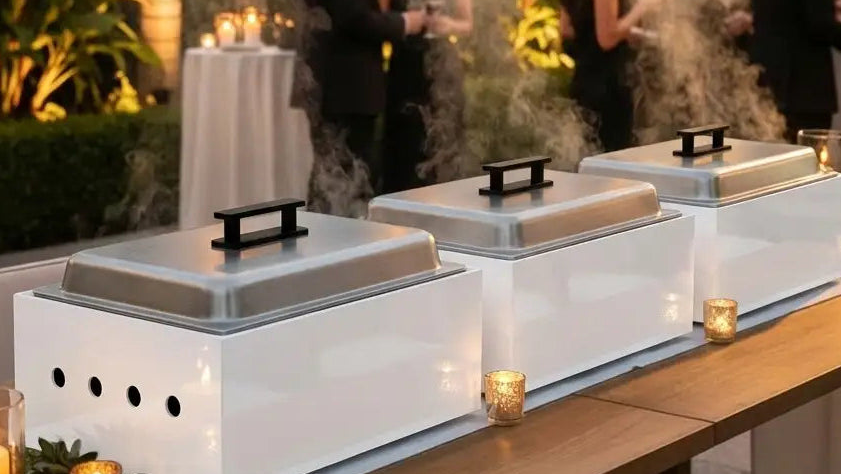
- 4 to 6 full-size chafing dishes with gel fuel and induction-compatible if possible
- Magnetic chafing dish guards for every chafer (health code in many jurisdictions)
- Serving utensils: slotted spoons for eggs, tongs for bacon, spatulas for pancakes
- Heat lamps or warming trays for items that do not fit chafers (waffle station, omelet station)
- Thermometer and log sheet, with temperatures logged every 2 hours
Cold station
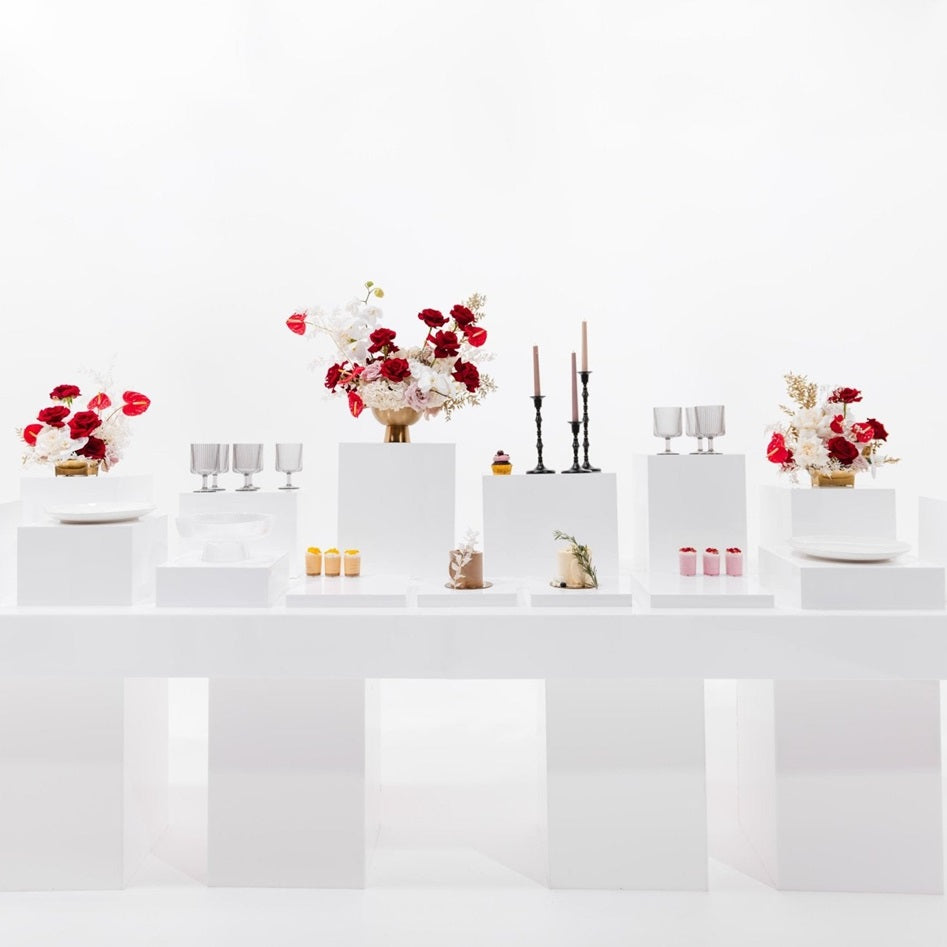
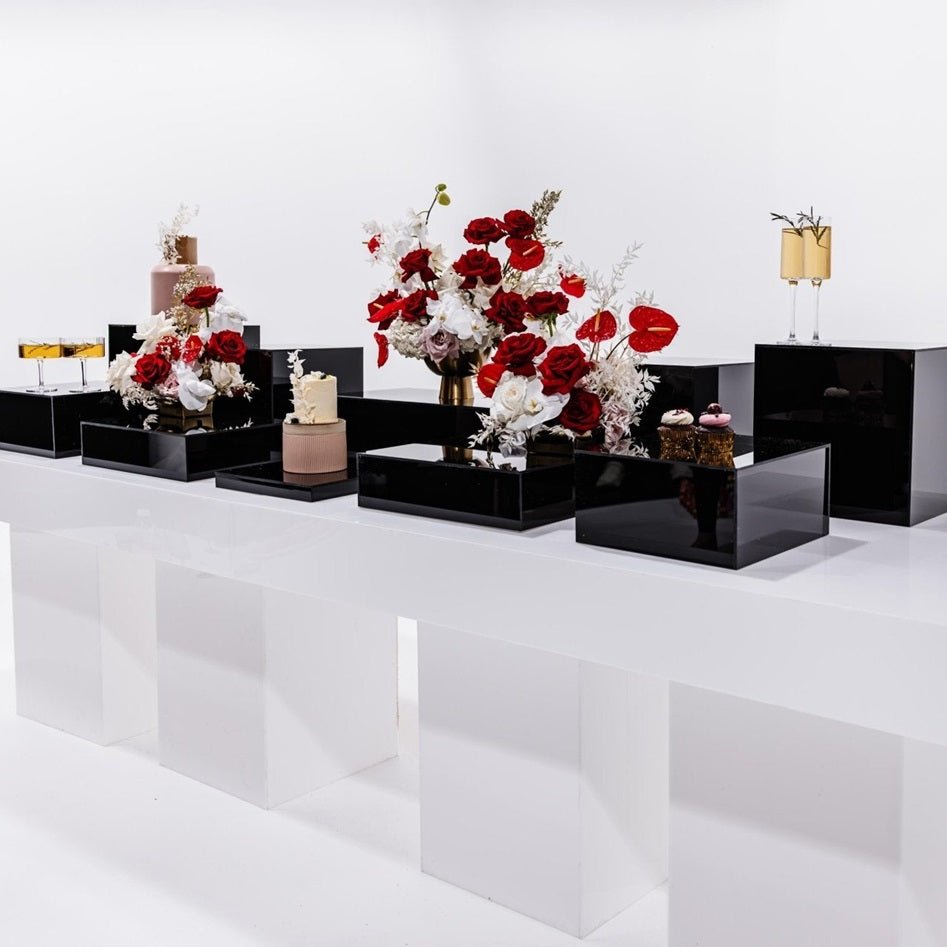
- Acrylic risers in graduated heights for yogurt, fruit, cheese displays
- Ice bath inserts for dairy and fresh fruit
- Labeled dispensers for cereal, granola, dried fruit
- Milk carafes (whole, skim, plant-based options in matching carafes)
- Juice station with concentrated or fresh-squeezed options
Bakery station
- Tiered acrylic plinths for pastries and bread, including a 3-tier acrylic buffet tower for hotel breakfast stations that fits the standard bakery island footprint and stacks flat for storage
- Toaster station with tongs
- Butter and preserves in small clear containers with tiny labels
- Croissants, muffins, bagels at separate heights so guests can differentiate from across the room
Why acrylic beats other materials for daily service
Versus wood: Wood absorbs moisture from steam, condensation, and cleaning. After 3 months of daily service, untreated wood smells and stains. Sealed wood lasts longer but the seal wears off at high-traffic touchpoints.
Versus painted metal: Paint chips at corners and lids. Once the paint is compromised, rust appears. Takes about 6 months in a high-humidity breakfast environment.
Versus ceramic: Beautiful, but breaks when dropped. Replacement cost over 5 years exceeds commercial acrylic by 3 to 5x.
Versus consumer acrylic (1/8 inch or thinner): Yellows with exposure to kitchen lighting and UV. Cracks under the weight of a full chafing dish of water. Typical lifespan 6 to 12 months.
Commercial-grade 5mm acrylic (what Plinths New York uses): Non-porous, color-stable under continuous UV, rated for full-pan weight, easy to sanitize with food-safe cleaners. Lasts 5+ years of daily hotel service.
The White Range is designed for hotel buffets
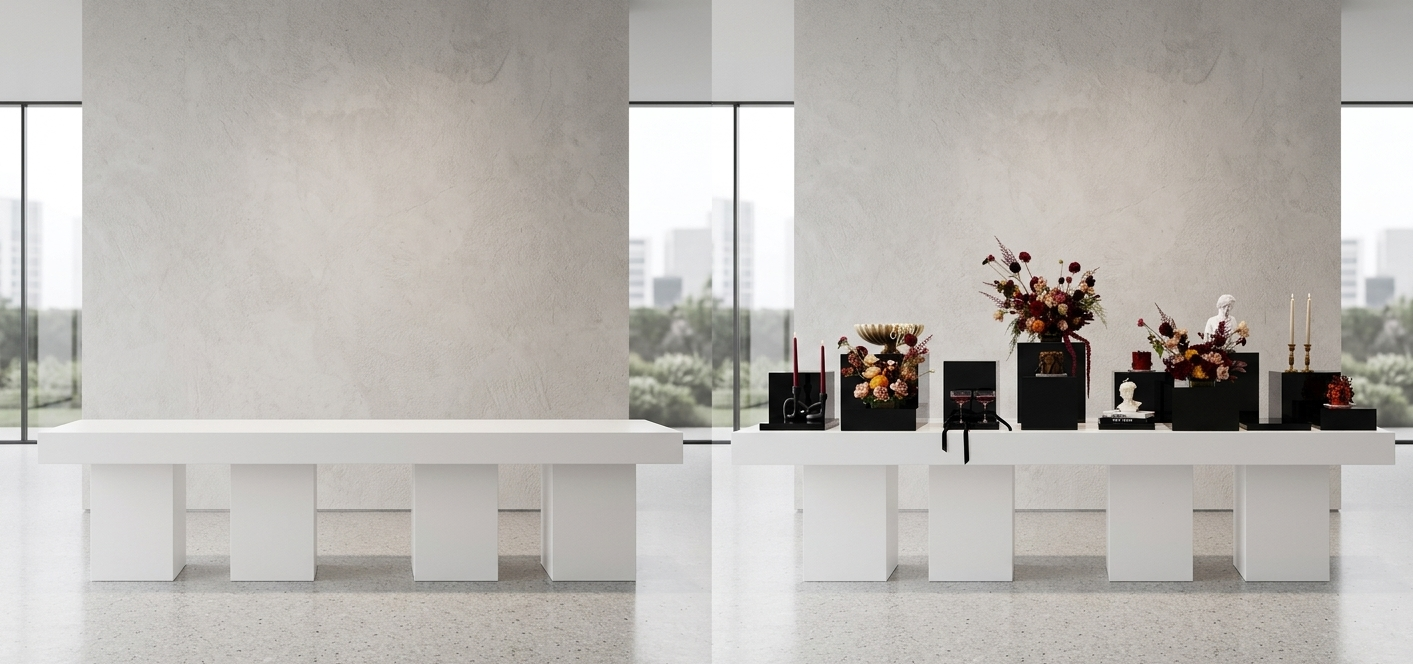
Plinths New York's White Range 15-piece set was built specifically for operations like hotel breakfast. The reasoning:
- White acrylic matches almost any hotel aesthetic from boutique to Hilton-tier
- Non-porous surface cleans with standard food-safe sanitizer
- Graduated heights cover the full vertical range needed for any station
- Nesting design means the full 15-piece set stores in minimal back-of-house space
- Replacement pieces available individually so a single cracked unit does not force a full set replacement
Food safety compliance essentials
Hotel breakfast operators face more inspection frequency than wedding caterers. The top food safety failure points at buffets:
- Temperature holds. Hot food must stay above 135°F. Cold food must stay below 41°F. Gel fuel needs to be replaced within its burn rating, and chafer water levels need to be maintained.
- Physical barriers. Chafing dish guards are now required in many jurisdictions. Magnetic acrylic guards install without tools and do not interfere with serving.
- Utensil contamination. Each dish needs its own utensil. No sharing. Keep a backup utensil set for rapid swap when a guest touches one improperly.
- Labels with allergens. Major allergens (gluten, dairy, nuts, eggs) must be called out. Small acrylic label holders at each dish solve this cleanly.
- Hand sanitizer at buffet entry. Required in most jurisdictions post-2020. Placed before guests approach the food.
Setup and breakdown timing
Setup (before service): - 45 minutes before opening for a 2-station buffet - 75 minutes before opening for a 3-island buffet with full bakery station - Always include 15 minutes of buffer for thermometer checks and final alignment
Breakdown (after service): - 30 minutes for full cleanup, wipe-down, storage - Acrylic risers wipe clean in seconds if using food-safe spray - Chafers need to cool before fuel removal and water dump
Daily rhythm for hotel breakfast teams: Most hotels run 6:30am to 10:30am service. That means 5:15am setup and 11:00am breakdown complete. A well-designed buffet with the right equipment runs on 2 to 3 staff for the full cycle.
FAQ
What is the minimum equipment for a hotel continental breakfast? Two to three chafing dishes, one tiered pastry display, one cold buffet island with 4 to 6 risers, coffee service, juice dispenser, and labeled dispensers for cereal and fruit. Base setup can be done with 8 display pieces.
How often should acrylic risers be replaced in hotel service? Commercial-grade 5mm acrylic should last 5+ years under daily service. Consumer-grade (under 3mm) lasts 6 to 12 months. The math favors commercial upfront even if the cost is 2 to 3x higher.
Do hotel breakfast buffets need chafing dish guards? In most US jurisdictions, yes. Check local health code. Magnetic acrylic guards are now the industry standard because they install without tools, do not obstruct sightlines, and pass inspection reliably.
Can the same display system work for breakfast and evening event catering? Yes, if the system is neutral enough (white or clear acrylic). Many hotels use the same core risers for daily breakfast and rotate them into banquet service for weddings and corporate events. The White Range is designed for this dual-use pattern.
How do I clean acrylic risers between services? Food-safe disinfectant spray + microfiber cloth. No abrasive sponges or paper towels (they micro-scratch the surface over time). Avoid alcohol-based cleaners on cheap acrylic since they can cloud the surface. Plinths NY acrylic is alcohol-tolerant, but microfiber + water is sufficient for daily cleaning.